

When I first became President, I noticed something strange: people started hanging on my every word. I set the strategy. I made the calls. Apparently, I set the tone for the whole organization.
And yeah, some of that’s true. But what I’ve come to understand is that no matter how many decisions I make, the company’s success depends on everyone else just as much—if not more.
Unfortunately, not everyone sees it that way. And that’s the problem.
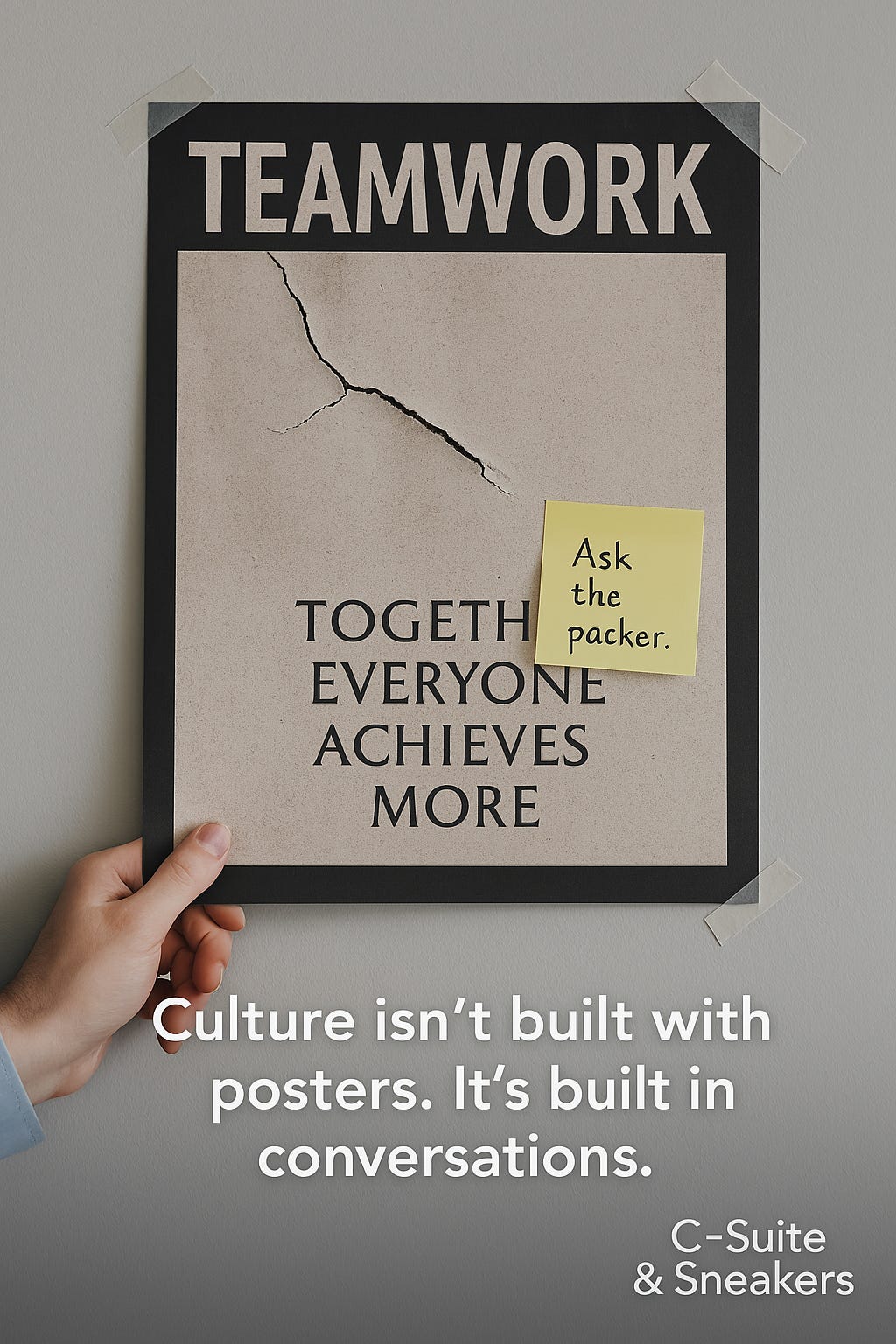
Let’s talk about packaging, for example. I’m in the B2B hardware space—not exactly TikTok unboxing material. But when our product arrives at a customer’s door, who’s the last person to touch it? The packer. That’s our last shot at quality control. That’s our first impression. That is the customer experience.
And it’s not just packaging. It’s accounts receivable. Order entry. Customer service. Tech support. Manufacturing. Everyone plays a part in how we’re perceived.
And if people don’t know that, we’ve got a problem.
That’s why I started doing employee roundtables. No agenda. Just honest conversations. I ask questions, and I listen. Really listen.
One of my favorite examples: I spoke to a team member whose role involves using one of our products to build finished goods for our customers. Her equipment was over 10 years old and barely holding on. She wasn’t complaining—she was worried. About missing deadlines. About quality issues. About disappointing our customers.
Here’s the problem: she didn’t know or feel she could speak up.
Once she did, I sent her three new units—two to use and one as a spare. We also set up a repair flow to minimize downtime. Not a huge investment financially, but a massive one in trust. She lit up. Told her coworkers. Sent me a thank-you note. And most importantly? She felt seen. That’s the employee you want on your front line. Someone who cares so much about the customer that she finds a way until someone listens.
The lesson? People want to do great work. Most don’t wake up thinking, “I’m going to half-ass it today.” But somewhere between waking up and working, something breaks that connection between effort and impact.
Our job as leaders is to bridge that gap. Make the connection clear. Show how their work drives customer success. Reward the behavior that reinforces it. Say thank you. Often.
Because creating a culture where everyone matters isn’t a memo. It’s not a motivational poster. It’s work.
Here’s why:
People. Everyone—from leadership to the front line—has to believe it. And then they have to act like it. That means tough decisions. Sometimes, it means putting long-term values ahead of short-term wins. That’s not always easy when Wall Street—or your board—is driving you for numbers or your bonus is on the line.
Culture inertia. If your company wasn’t built this way from the start, it takes real effort (and time) to shift the mindset. You’ll feel it. Especially when legacy thinking collides with new expectations.
Ownership pressure. If your company is publicly traded, forget it—ok, don’t forget it, but recognize the system isn’t exactly built for patience or values-based decisions. Quarterly earnings calls have a way of pulling focus.
Constant vigilance. You have to define your values and then hire people who align with them. And more importantly, you have to let go of the ones who don’t. That’s the part no one likes to talk about—but it matters. One bad fit can poison the well. I’ve seen it happen, and I’ve had it happen. It doesn’t mean they are bad people; they just don’t fit, and the sooner you address it, the better - for you both.
And through all of that, you still need to lead. While running the business. Hitting the numbers. Dealing with the fires. That’s the problem. That’s why this is hard. And that’s why most companies fall short.
So… will this work?
Honestly? I don’t know. I haven’t reached nirvana. But I’ve been part of teams that got close. And those were some of the best working experiences of my career.
That’s why I keep pushing.
If you’ve seen this work—or better yet, if you’ve built it—I’d love to hear about it. Because this isn’t a one-size-fits-all blueprint. It’s a messy, human, ongoing effort. But if we get it right? That’s when work gets good, and we all succeed.